UPS Battery vs Inverter Battery: Stop Using Them Interchangeably
You think a battery is a battery.
It’s not.
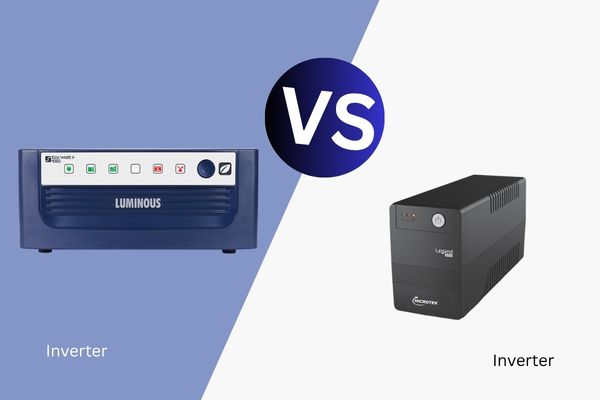
A UPS battery and an inverter battery are completely different machines wearing the same clothes. Put the wrong one in the wrong place? You’ll regret it.
This mistake costs people ₹5,000-₹15,000 in damage every year.
Let’s fix that.
They’re Designed for Different Jobs
UPS Battery Job: Protect your computer during a 10-minute power cut so you can save your work and shut down safely.
Inverter Battery Job: Run your lights, fans, and AC for 4-12 hours while power is out.
Same look, completely different purpose.
Think of it this way:
- UPS = Airbag (quick, violent protection)
- Inverter = Seatbelt (sustained, steady protection)
You wouldn’t swap them in a car. Don’t swap them in your electrical system.
The 5 Key Differences
Difference #1: What They’re Built to Do (Purpose)
UPS Battery:
- Switches from mains to battery in milliseconds (no lag)
- Protects against data loss
- Example: You’re typing in Microsoft Word. Power cuts. UPS keeps computer alive for 10 minutes. You save your document. Power comes back. Problem solved.
- Duration: 5-30 minutes of power
Inverter Battery:
- Provides continuous backup power
- Runs your home through extended outage
- Example: Power cuts at 8 PM. Inverter kicks in. Your lights stay on, fan runs, you watch TV, eat dinner. Power comes back at midnight. You didn’t even notice.
- Duration: 4-12 hours of power
Why they’re different:
- UPS prioritizes speed
- Inverter prioritizes duration
Difference #2: Charging Speed (Fast vs. Slow)
UPS Charging:
- Designed to charge FAST: 3-4 hours full charge
- Why? Power comes back, UPS must be ready for next outage
- Charger is powerful, charges aggressively
- Battery can handle frequent charging
Inverter Charging:
- Designed to charge SLOW: 12-16 hours full charge
- Why? Normal electricity flow, no rush
- Charger is gentle, preserves battery
- Battery designed for slower, prolonged charge
What happens if you cross them:
- UPS charger + Inverter battery = Battery overheats, dies in 2 years
- Inverter charger + UPS battery = Never fully charges, can’t protect systems
Real example: A customer bought inverter battery and put in UPS system. UPS charger overheated the battery. After 8 months, battery failed. He thought the battery was bad. It was the wrong match.
Difference #3: How Much Power They Release (Discharge Profile)
UPS Discharge:
- Rapid, high-power discharge
- Deliver 100% power immediately
- Good for 5-15 minutes of full power
- Built for short bursts
- Starter motor analogy: Engine cranks hard and fast
Inverter Discharge:
- Gradual, moderate-power discharge
- Deliver moderate power continuously
- Good for 4-12 hours of sustained power
- Built for marathon running
- Fan analogy: Runs all evening at steady speed
If you swap them:
- UPS battery in inverter: Drains completely in 1-2 hours (you expected 6-8)
- Inverter battery in UPS: Can’t deliver power fast enough when needed (system fails)
Difference #4: Internal Design (Why They’re Built Different)
UPS Internal:
- Thin lead plates (for fast discharge)
- Optimized for speed over duration
- Electrolyte formulated for rapid reaction
- Result: Excellent for quick bursts, poor for sustained drain
Inverter Internal:
- Thick lead plates (for sustained discharge)
- Optimized for duration over speed
- Electrolyte formulated for slow, steady discharge
- Result: Excellent for 8-hour backup, poor for rapid response
Analogy:
- UPS = Sports car (fast acceleration, short distances)
- Inverter = Truck (slower, carries heavy load for long distance)
You wouldn’t use a sports car to haul cement. Why use wrong battery in wrong system?
Difference #5: Where They Live (Environment)
UPS Location:
- Office: Cool, dry, climate-controlled room
- Temperature: Constant 20-25°C
- Humidity: Low (10-30%)
- Usage: Placed, stable, rarely moved
- Result: UPS batteries last 5+ years in ideal conditions
Inverter Location:
- Home: Harsh environment (basement, terrace, balcony)
- Temperature: Swings 25-45°C (especially Delhi)
- Humidity: High 40-80% (brutal in monsoon)
- Usage: Stationary in difficult location
- Challenge: Heat and humidity shorten life
- But design accounts for this
Why it matters:
- UPS won’t last long in hot, humid basement
- Inverter is built for harsh conditions
- Each is designed for its environment
- Put them wrong = failure
What Actually Happens When You Swap Them
Scenario: Office Uses Wrong Battery
Manager orders “battery” online without specifying UPS or inverter.
Receives inverter battery by mistake. Installs in UPS.
Day 1-30: Seems fine Day 30: Power cut. UPS powers computers for 5 minutes instead of 15 (not enough time to save work) Day 60: Second power cut. UPS fails completely Day 61: Calls complaining about battery quality (but battery is wrong type)
Real cost: ₹5,000 wrong battery + ₹15,000 lost work + ₹8,000 new correct battery = ₹28,000 total damage
Original purchase could have avoided this with ₹500 more (correct battery).
Scenario: Home Uses Wrong Battery
Owner buys cheap “battery” without checking type.
Gets UPS battery for inverter.
Day 1: Seems fine Day 2: Power cut. UPS battery drains in 1.5 hours (expected 6+) Day 3: Family sitting in dark because “battery” died Day 4: Owner angry, buys correct inverter battery, throws away UPS battery
Real cost: ₹6,000 + ₹8,000 + wasted time + family anger = ₹14,000 damage + family frustration
How to Know What You Actually Need
Choose UPS Battery If:
- You need to protect computers/servers
- You want 5-15 minute backup (not hours)
- You’re willing to pay premium
- You have climate-controlled room
- You want data protection priority
Choose Inverter Battery If:
- You want extended home backup (4-8 hours)
- You need lights, fan, AC running for hours
- You’re in harsh environment (heat, humidity)
- You want value for money
- You can tolerate longer charging time
Choose Both If:
- Office with UPS (for servers) + Inverter (for office lights)
- Large building needing multi-level protection
- Data center with redundancy needs
Brands That Make Both
Luminous:
- UPS: EC series (office grade)
- Inverter: RC, Ishi series (home grade)
- Quality: Strong in both
Sukam:
- UPS: Intelli series
- Inverter: PCU Plus, Bravo series
- Quality: Good in both
Microtek:
- Makes both
- Quality: Decent range
Important: Just because a brand makes both doesn’t mean you can use them interchangeably. They’re still different products.
Real-World Scenario: Office Month-End Crisis
You’re in CP. Month-end accounts closing. 20 computers running.
Wrong solution: Buy 1 big inverter battery for “backup”
- Expensive, overkill
- Can’t protect server (no UPS)
- Computer data still at risk
Right solution: UPS for servers (5 critical computers) + Inverter for office lights/AC
- Servers protected (data safe)
- Office continues working (lights, AC running)
- Optimal cost
- Redundancy
How to Choose Correctly (Step-by-Step)
- Identify your need: Data protection? OR Extended runtime?
- Check location: Office room or home/hot area?
- Assess load: How many devices? High power or low?
- Decide budget: Premium or budget?
- Call expert: “Here’s my situation…” → They recommend right type
We recommend type based on your situation.
Not what makes more money for us. What works for you.
Common Mistakes to Avoid
❌ Buying “battery” without specifying type ❌ Assuming one battery works everywhere ❌ Putting UPS battery in inverter system ❌ Putting inverter battery in UPS system ❌ Believing warranty covers misuse ❌ Using cheap no-brand batteries (wrong type likely)
The Bottom Line
UPS and inverter are different.
- Different purpose
- Different charging speed
- Different discharge rate
- Different internal design
- Different environment requirements
You can’t swap them. It’s like putting diesel in a petrol car. They look compatible but aren’t.
Before you buy, ask: “Is this a UPS battery or an inverter battery?”
If the seller can’t answer clearly, buy somewhere else.
Free consultation at Moscow Batteries:
Tell us your situation. We tell you which type you need. No obligation. No pressure.
Call 8527267799.